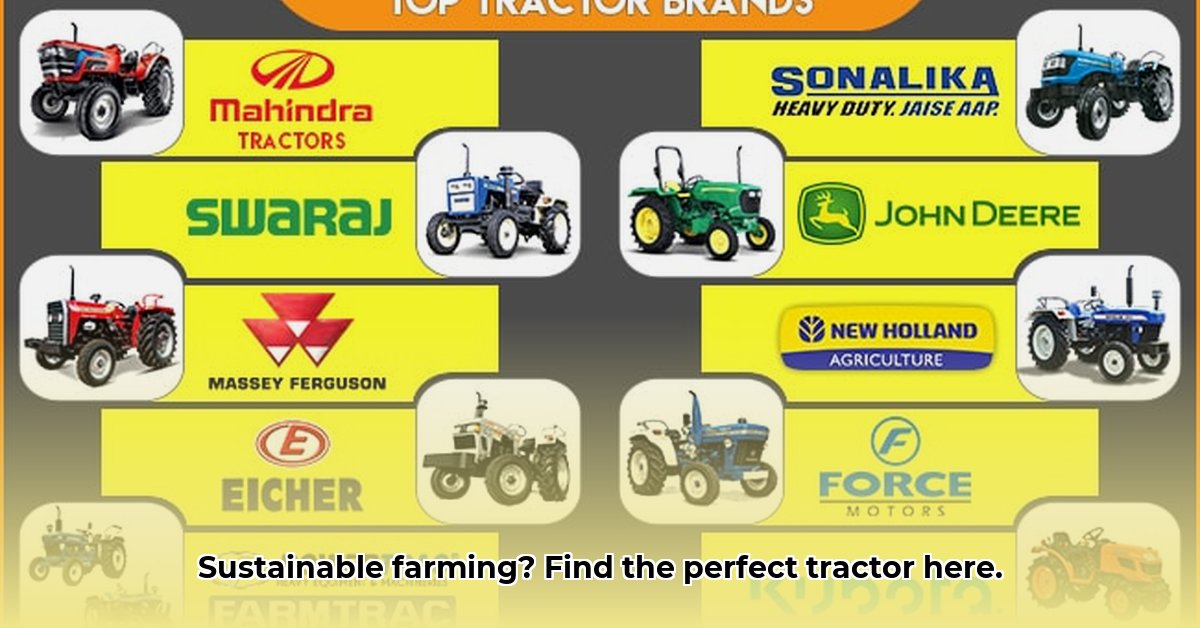
Choosing the right tractor is a pivotal decision for any farmer, especially those committed to sustainable practices. This guide will help you navigate the complexities of various tractor brands, focusing on factors crucial for environmentally responsible and economically sound farming. We'll explore popular brands, delve into crucial sustainability considerations, and provide a step-by-step approach to making an informed decision. For more information on major manufacturers, see this list of large tractor manufacturers.
Popular Tractor Brands: Finding the Right Fit for Your Sustainable Farm
The agricultural machinery market offers a wide range of tractors, from well-established giants to specialized niche players. While brands like John Deere, Case IH, and New Holland dominate the market with vast model selections catering to diverse farming scales, smaller brands like Ventrac offer specialized tools perfectly suited for precise, sustainable operations, especially in environmentally sensitive contexts. The "best" brand isn't universal; it depends entirely on your specific farming needs and goals.
What Truly Matters: Sustainability in Action
Selecting a tractor for sustainable farming requires prioritizing factors beyond brand recognition. Fuel efficiency, precision technology, durability, and ease of maintenance are paramount for minimizing environmental impact and maximizing long-term economic viability.
Fuel Efficiency: Minimizing Your Environmental Footprint
Fuel efficiency goes beyond raw horsepower. The crucial metric is fuel consumption per acre. Lower fuel consumption directly translates to reduced operating costs and a smaller carbon footprint. Before committing to a purchase, meticulously examine the manufacturer's fuel efficiency data. Don't just look at the horsepower rating, but delve into the specifics of fuel consumption—it's an essential element of sustainable farming.
Precision Technology: Farming Smarter, Not Harder
Modern tractors incorporate advanced technologies that significantly enhance sustainability. GPS-guided implements, auto-steer systems, and variable-rate technology optimize resource use, minimizing fertilizer, pesticide, and water consumption. These technologies allow for more precise application, reducing waste and protecting the environment. How effectively these precision tools enhance your unique farming operations should be a key factor in your decision.
Durability and Longevity: Reducing Waste and Environmental Impact
A durable tractor with a long lifespan minimizes waste and reduces your farm's environmental footprint. Research each brand's reputation for reliability and the availability of replacement parts. Easier access to parts ensures less downtime, which directly translates to a reduction in repair costs. This is a crucial factor that contributes heavily to your long-term sustainability.
Maintenance: Keeping Your Tractor in Top Shape
Regular maintenance is essential. Easy access to parts and reliable service are crucial for minimizing downtime and keeping your costs under control. Downtime translates directly to lost productivity. A tractor that spends more time in the shop negatively impacts your efficiency and profitability. Research the brands' servicing options and part availability in your region before making a purchase.
A Quick Overview of Popular Tractor Brands
Direct comparison of the environmental impact across all brands is challenging due to the lack of standardized data. However, we can highlight general strengths and weaknesses based on industry reputation:
| Brand | Strengths | Potential Drawbacks |
|---|---|---|
| John Deere | Wide model range, cutting-edge technology | Higher initial cost |
| Case IH | Rugged construction, dependable performance | Might lack some cutting-edge sustainable features |
| New Holland | Competitive pricing, extensive model selection | Technology integration might need improvement |
| Smaller Brands (e.g., Ventrac) | Specialized tools for sustainable practices | More limited selection, potentially higher price |
Remember, the optimal brand for your farm depends on individual factors such as farm size, crop type, and specific sustainability targets.
The Bigger Picture: Sustainable Farming is Holistic
Sustainable farming encompasses more than just the tractor itself; it’s a holistic system. Integrating data-driven decision-making, exploring alternative fuels (where feasible), and prioritizing soil health are all essential components of a broader sustainable approach.
How to Compare Tractor Brands for Sustainable Farming
Key Takeaways: Sustainable farming demands tractors that minimize emissions and maximize resource efficiency. Successful selection involves evaluating fuel efficiency, precision farming capabilities, long-term costs, and data management capabilities.
A Step-by-Step Guide to Choosing Your Tractor
- Define Your Needs: Assess your farming operations, farm size, soil conditions, and budget.
- Research Tractor Models: Explore models from different brands aligning with your needs and budget.
- Compare Specifications: Analyze fuel efficiency (liters/hectare), horsepower-to-weight ratio, and precision farming features.
- Consider Long-Term Costs: Factor in maintenance, repairs, and the tractor's expected lifespan.
- Seek Farmer Testimonials: Gather insights from farmers using different brands.
- Assess Data Management: Evaluate data management capabilities and software compatibility.
- Evaluate Dealer Support: Ensure reliable service and parts availability.
- Make Your Decision: Choose the tractor best suited for your long-term sustainability goals.
Choosing a tractor is a significant investment. By carefully considering these factors, you can select a machine that supports both your farm's economic success and your commitment to environmental responsibility.